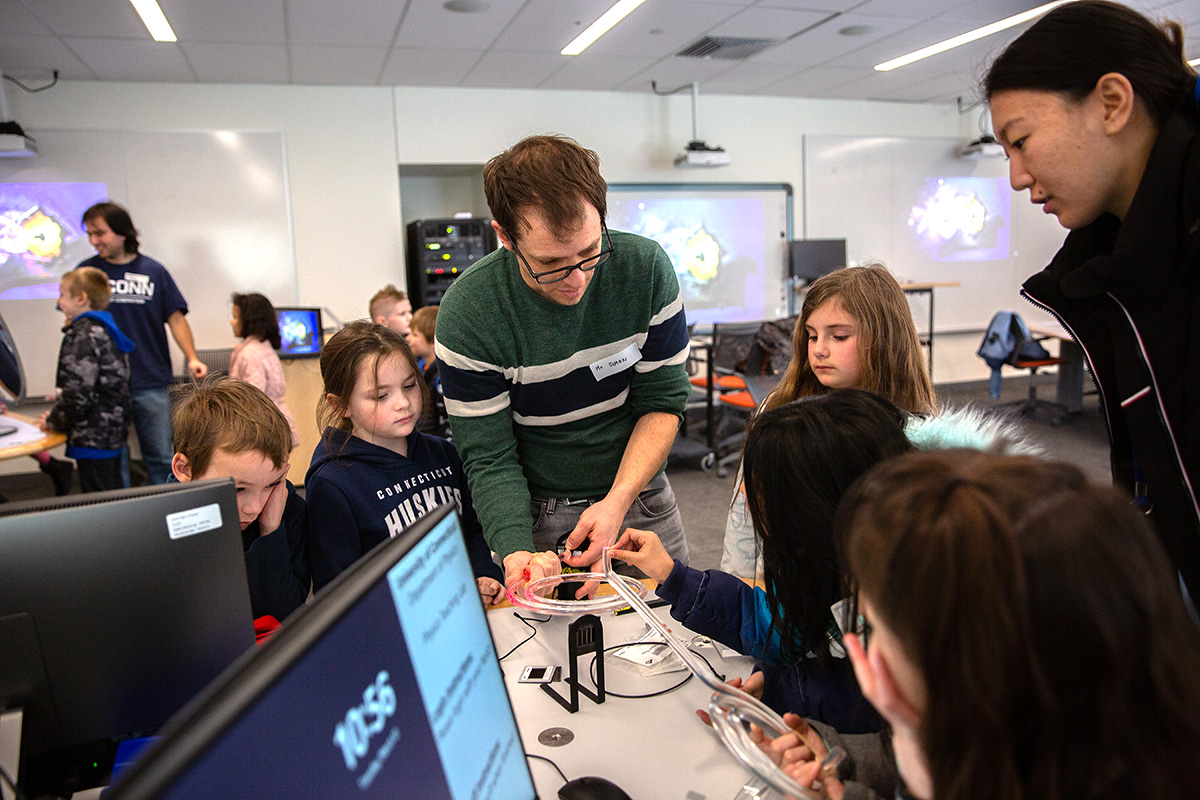
UConn’s College of Liberal Arts and Sciences helps improve lives and strengthen communities in Connecticut and beyond.
Our impact extends far beyond campus. Through teaching, research, and public engagement, CLAS prepares future leaders, creates new knowledge, and works with communities to address real-world challenges.
Educational Impact
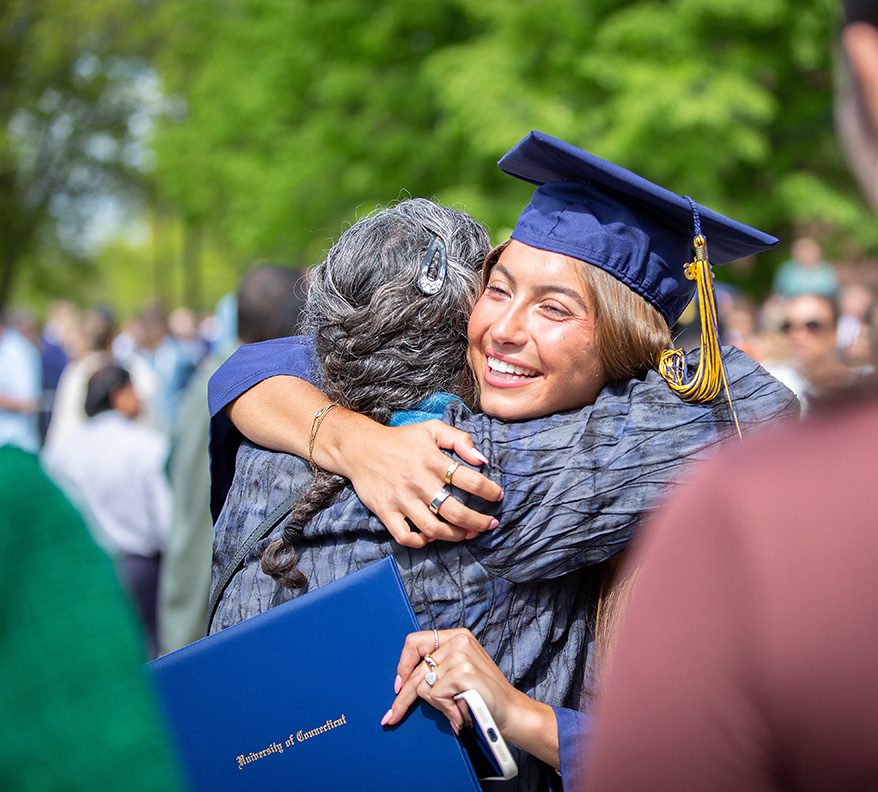
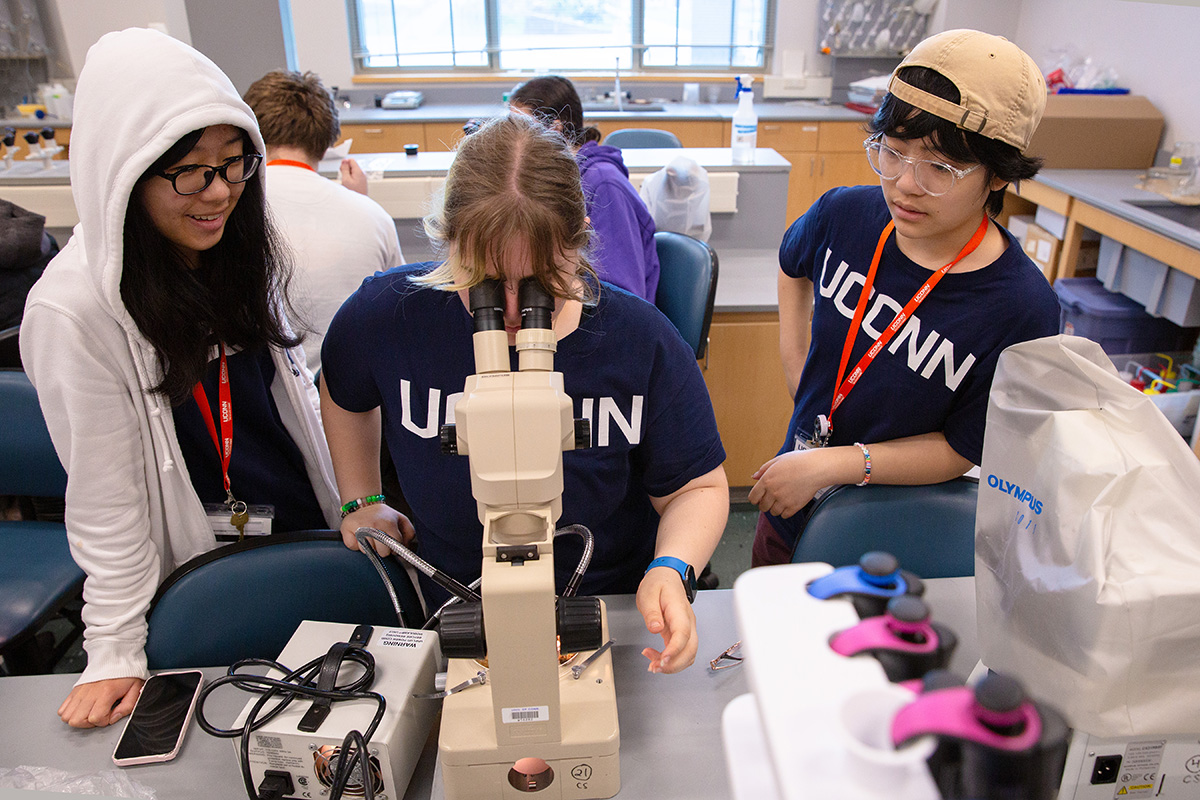
As UConn’s academic core, CLAS helps educate nearly every undergraduate student at the University. Through a liberal arts and sciences foundation, students develop skills in analytical thinking, ethics, communication, and problem-solving that prepare them for careers, civic life, and lifelong learning.
Beyond UConn, CLAS supports learning throughout Connecticut. Our faculty, staff, and students:
- Support K-12 education across Connecticut through curriculum development, teacher training, and Early College Experience partnerships that bring college-level learning into high school classrooms.
- Host programs that introduce pre-college students to academic fields, helping them build confidence, explore future opportunities, and prepare for higher education.
- Connect learners of all ages with new ideas and discoveries through public lectures, community events, alumni engagement, and other public programs.
Economic Impact
CLAS strengthens Connecticut by preparing graduates for meaningful careers, advancing innovation, and contributing expertise that helps communities respond to today’s challenges.
Workforce Development
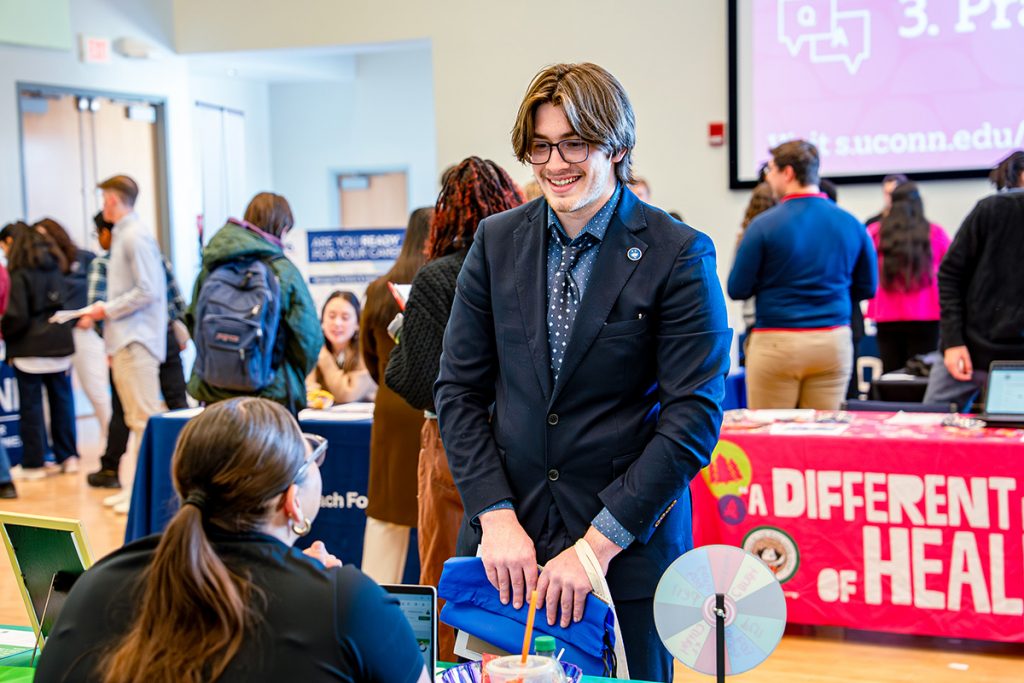
CLAS graduates contribute to nearly every sector of Connecticut’s economy, including education, health care, government, business, nonprofit organizations, research, technology, public service, and the creative industries.
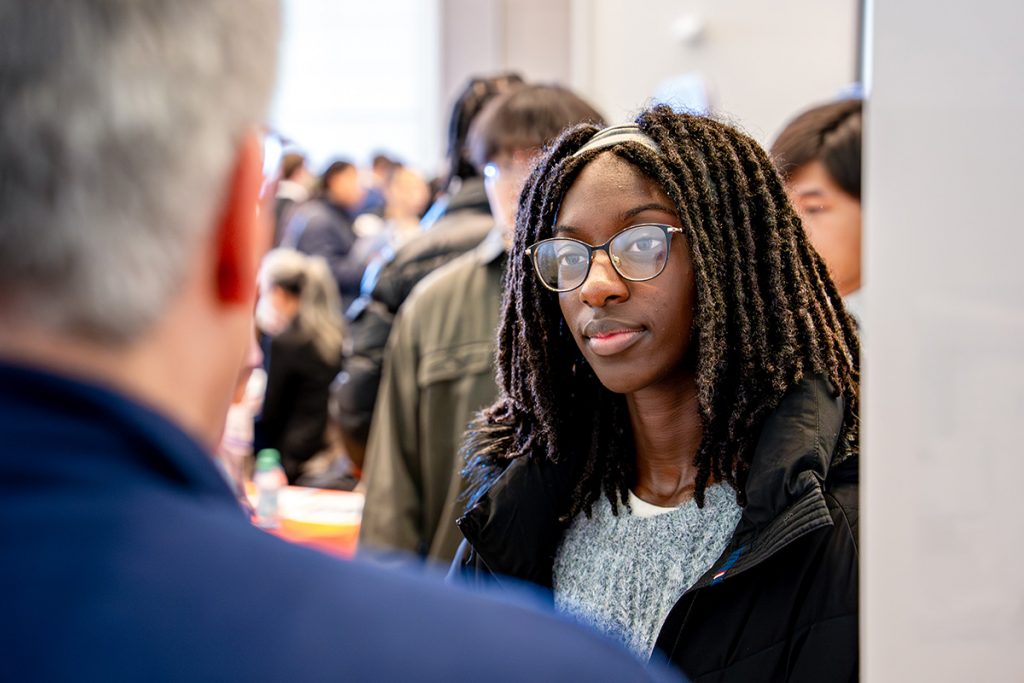
Through research, internships, clinical placements, community partnerships, and other hands-on experiences, students develop the communication, analytical, creative, and problem-solving skills employers value. These experiences prepare graduates to adapt, lead, and contribute throughout their careers while strengthening Connecticut’s workforce.

Research and Innovation
CLAS faculty contribute their expertise far beyond the classroom. They advise government agencies, serve as consultants to industry and nonprofit organizations, contribute to professional organizations, and help inform public policy and decision-making across Connecticut.
Faculty also advance innovation through research partnerships, entrepreneurship, and service on state and national advisory boards. Many are recognized among the state’s leading experts, including election to organizations such as the Connecticut Academy of Science and Engineering, helping connect University research with public needs and economic opportunity.
Community Impact
CLAS works with communities to improve lives. Our faculty, students, staff, and alumni partner with schools, government agencies, Tribal Nations, nonprofits, cultural organizations, health care providers, and community groups. Together, they expand educational opportunity, inform public policy, and address challenges that affect people’s daily lives.
This work takes many forms, including:
- Community-engaged research that helps organizations and policymakers better understand and respond to local challenges.
- Public scholarship and policy expertise that informs decision-making at the local, state, and national levels.
- Clinical programs and placements that expand access to services while providing students with hands-on experience.
- K-12 outreach and educational partnerships that support students, educators, and schools across Connecticut.
- Museums, public lectures, and cultural programs that connect communities with new ideas, research, and discoveries.
Service and Outreach Units
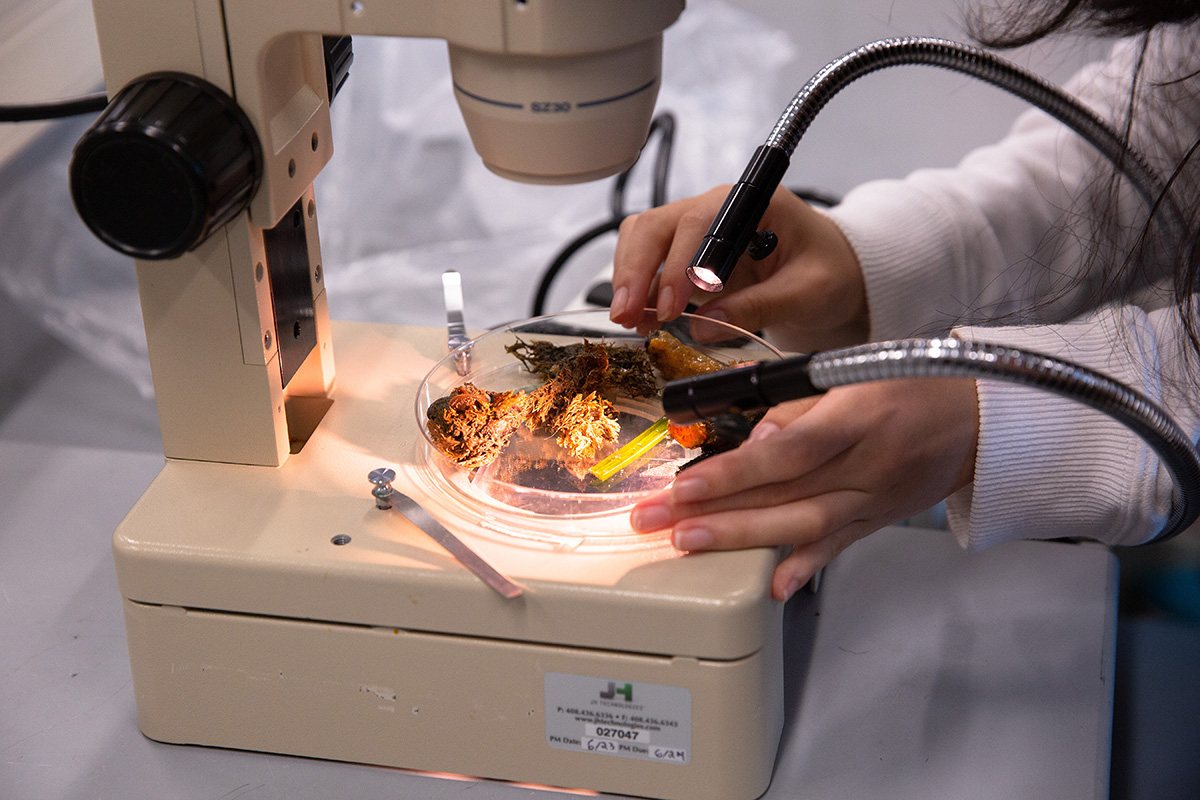
Biodiversity Research Collections
Supports biodiversity research, conservation, and education through scientific collections that advance understanding of the natural world.
UConn Botanical Conservatory
Home to the largest living plant collection at an academic institution in the Northeast, supporting research and immersive learning for the public.
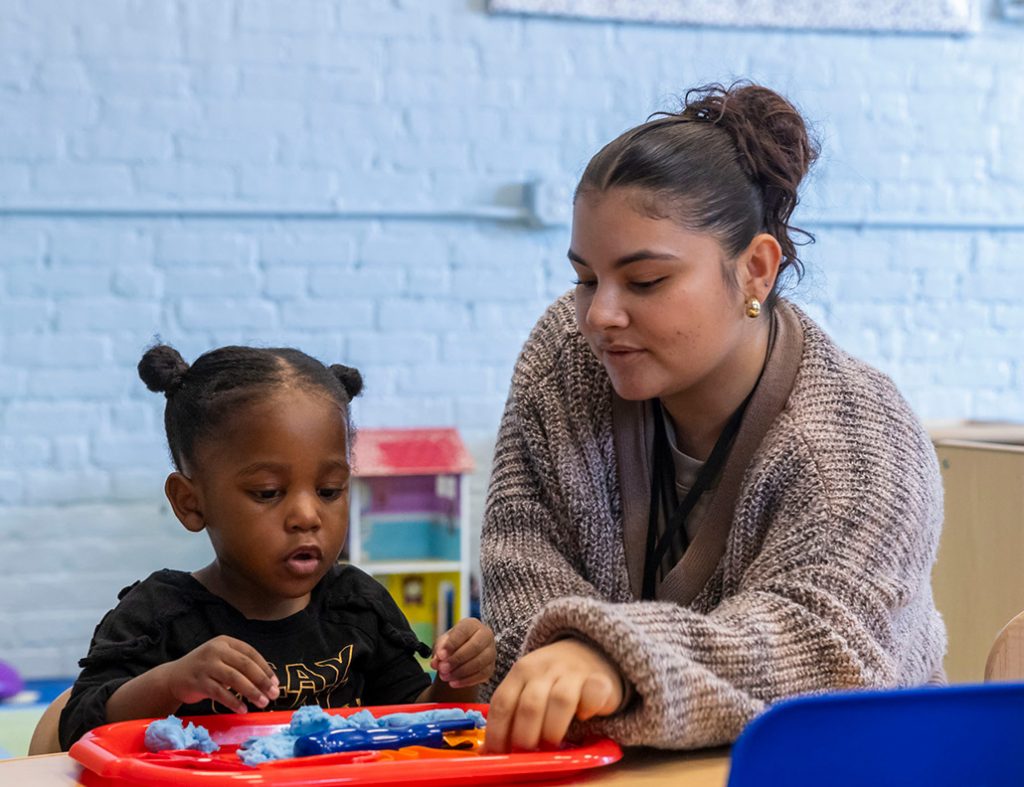
Child Development Labs
Supports children and families while advancing child development research and preparing future early childhood educators.
Connecticut State Museum of Natural History
Connects communities with Connecticut’s natural history through exhibitions, educational programs, research, and public events.
Office of the Connecticut State Historian
Promotes understanding of Connecticut’s history through public scholarship, education, and community engagement.
Office of the Connecticut State Ornithologist
Advances bird conservation and public understanding of Connecticut’s wildlife through research, education, and community engagement.
Psychological Services Clinic
Provides mental health services to children, teens, adults, families, and UConn students while training future clinical psychologists.
Speech and Hearing Clinic
Provides speech-language pathology and audiology services while preparing future clinicians through hands-on training and research.